
The Forgotten Fire: How Zarathustra Shaped the Moral Architecture of Christianity
We like to imagine that the world’s great spiritual traditions sprang fully formed out of isolated deserts, untouched by the empires, trade routes, and neighboring thinkers surrounding them. Most people walk into a church, recite a creed about heaven, hell, angels, Satan, and the final resurrection of the dead, and assume every single one of those concepts originated exclusively inside ancient Judea. That assumption misses one of the most breathtaking chapters in human intellectual history. Centuries before Jesus of Nazareth walked the shores of Galilee, an Iranian prophet named Zarathustra stood beside sacred fires on the Central Asian steppes and articulated a radical new vision of the cosmos—a vision that would quietly cross the Tigris River, reshape Second Temple Judaism, and lay the foundational scaffolding for Christian theology. In my research examining comparative behavioral history and the evolution of human consciousness, I have watched modern readers experience genuine shock when they discover how deeply ancient Persia beats inside the Western moral conscience. Recognizing this hidden lineage does not diminish Christianity; it reveals how human beings across cultures wrestle with the same fundamental questions of suffering, choice, and redemption.
Why do we cling to the myth of spiritual isolation when the real story of cross-pollination is infinitely more inspiring? Most people get this wrong because they treat religious history like competing sports franchises rather than a living river of human awakening. When we trace the threads connecting Zarathustra’s ancient hymns to the Gospels, we uncover a profound truth about how the human mind learns to take responsibility for its own thoughts, words, and actions.
The Babylonian Crucible and the Birth of Moral Agency
History turns on unexpected collisions. In 586 BCE, King Nebuchadnezzar II destroyed the First Temple in Jerusalem and marched the Judean elite into exile in Babylon. For nearly five decades, the displaced community wrestled with a devastating existential crisis. Before the exile, ancient Near Eastern religions largely viewed the afterlife as a shadowy, undifferentiated cavern—Sheol—where kings and paupers alike drifted in dusty silence regardless of how virtuously they lived on earth. Suffering happened now, blessings happened now, and death closed the book.
Then came the autumn of 539 BCE. Cyrus the Great, founder of the Achaemenid Persian Empire, marched into Babylon without burning the city, shattered the chains of the captives, and funded the rebuilding of the Jerusalem Temple. The Hebrew Bible reserves its highest honorific for this Persian monarch, calling Cyrus the “anointed one”—the Messiah. Yet Cyrus brought far more than political liberation and silver vessels. He carried the spiritual worldview of Zarathustra, whose teachings had already permeated the Iranian plateau.
For the next two hundred years, Judea existed as Yehud Medinata, a peaceful province within the Persian Empire. Priests, scribes, and scholars traveled freely between Jerusalem, Babylon, and Susa. Ideas flowed along the Royal Road right alongside silk, frankincense, and silver coins. In behavioral science, we observe that periods of intense cultural contact force the human brain to reorganize its internal mental models—a process psychologists call cognitive accommodation. Confronted with a compassionate Persian empire that framed the universe around cosmic justice rather than capricious tribal gods, Second Temple Jewish thinkers began asking daring new questions. What if death does not have the final word? What if an invisible war between truth and deceit rages behind every human choice?
Cosmic Dualism, Free Will, and the Psychology of Good Thoughts
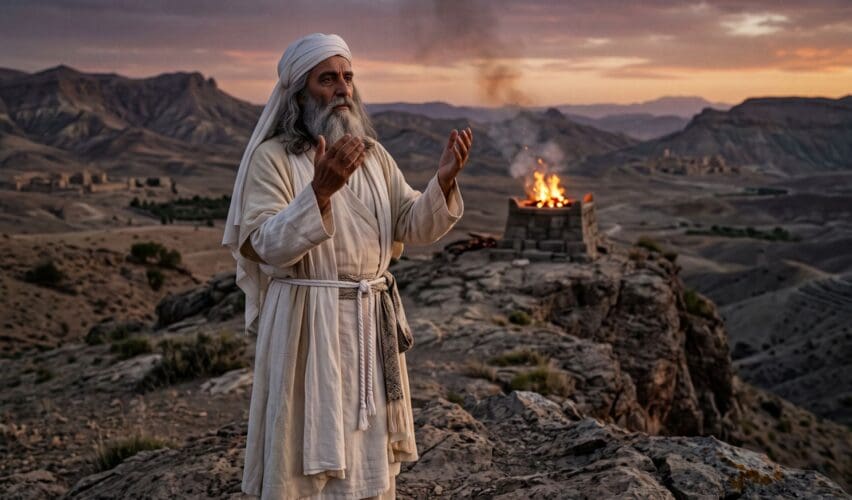
Long before Greek philosophers debated ethics in Athens, Zarathustra disrupted the ancient world by stripping away the fatalism that kept ordinary people paralyzed. Prior to his prophetic reforms, humans viewed themselves as helpless pawns tossed around by moody, unpredictable deities who demanded endless animal sacrifices to stave off floods and plagues. Zarathustra looked into the flame and declared something revolutionary: the supreme creator, Ahura Mazda, is wholly good, wholly wise, and desires human beings not as groveling slaves, but as conscious co-workers in the healing of the world.
Opposite Ahura Mazda stood Angra Mainyu—the destructive spirit of chaos, falsehood, and decay. Here enters the concept of cosmic dualism, yet look closely at how Zarathustra framed the battlefield. The war between Asha (truth, cosmic order, righteousness) and Druj (the lie, chaos, distortion) does not stay locked up in the clouds; it runs directly down the center of every human heart. Every man and woman possesses absolute moral free will to align with truth or collude with deceit.
To operationalize this cosmic responsibility in daily life, Zarathustra gave humanity a three-part behavioral compass that still rivals modern cognitive-behavioral psychology: Humata, Hukhta, and Huvarshta—Good Thoughts, Good Words, and Good Deeds. Think about the neurobiological brilliance encoded in that ancient triad. Modern neuroscience confirms that behavior never starts at the fingertips; it begins in the prefrontal cortex as an internal cognitive frame, travels into vocalized social reality through speech, and solidifies into habit through physical action. By placing Good Thoughts first, Zarathustra anchored human morality inside internal psychological integrity rather than external ritual compliance.
When these ideas filtered into post-exilic Judaism and later blossomed in early Christianity, they transformed Western ethics forever. We see the direct echo when Jesus teaches in the Sermon on the Mount that anger in the heart carries the same moral weight as murder, or when Paul urges believers to take every thought captive and renew their minds. The battleground moved inward. Human beings ceased to be passive victims of fate and stepped onto the stage as moral agents whose daily choices carry eternal weight.
Eschatology, the Chinvat Bridge, and the Architecture of Consequence
If every human choice matters, then history itself cannot simply spin in meaningless circles forever. Most ancient civilizations viewed time as an endless, repetitive wheel—spring followed winter, empires rose and crumbled, and nothing ever truly culminated. Zarathustra broke the wheel and stretched time into a purposeful, linear arrow rushing toward a grand cosmic climax.
In the Gathas—the ancient liturgical hymns composed by Zarathustra himself—time unfolds across a great drama culminating in Frashokereti, the final renovation of the universe. At the end of days, a world-savior born of a virgin—the Saoshyant—arrives to defeat the forces of darkness once and for all. The dead rise from the earth in physical bodies. A great river of molten metal purifies creation, burning away every trace of falsehood while feeling like warm milk to the righteous, ushering in a healed, immortal world free from suffering and death.
Sound familiar? Compare that sacred architecture to the core pillars of Christian eschatology. Prior to the Persian period, Hebrew scripture contains almost no developed doctrine of bodily resurrection, a cosmic devil opposing God, legions of named archangels, or a final judgment separating the righteous from the wicked. Following centuries of Persian proximity, those exact themes surge into prominence across texts like the Book of Daniel, the Dead Sea Scrolls, and the New Testament.
Even the personal journey of the soul after death bears Zarathustra’s unmistakable fingerprint. In Zoroastrian tradition, three days after physical death, the soul crosses the Chinvat Bridge—the Bridge of the Separator—spanning a deep abyss. For the truthful soul, the bridge widens into a broad highway leading to the House of Song, a realm of boundless light and joy. For the soul enslaved to deceit, the bridge narrows to the width of a razor’s edge, plunging the traveler into the House of Lies, a cold, dark realm of isolation.
I have spoken with countless individuals walking through grief, addiction recovery, or midlife spiritual crisis who feel suffocated by rigid, fear-based caricatures of heaven and hell. Yet when we look at Zarathustra’s original imagery, consequence is not arbitrary torture handed down by an angry tyrant; it is the natural, inescapable harvest of the reality we cultivated inside our own minds. You cannot spend fifty years building a fortress of deceit and suddenly feel comfortable standing inside a palace of pure light. Zarathustra taught us that our daily habits are quietly constructing the very atmosphere our souls will inhabit.
Nuance, Divergence, and the Living Flame of Shared Wisdom
Let us bring rigorous intellectual honesty to the table before anyone flattens two distinct, majestic traditions into a simplistic copy-and-paste story. Scholars of comparative religion have debated the exact directional flow of Persian and Judeo-Christian ideas for over a century, and nuance matters deeply here. Second Temple Judaism and early Christianity did not passively swallow Zoroastrianism whole; they filtered, wrestled with, and radically transformed what they encountered through the lens of strict monotheism.
Notice the crucial theological divergence. Classical Zoroastrianism features a symmetrical dualism where the evil spirit possesses independent creative power alongside the good creator until the end of time. Biblical monotheism fiercely rejected any notion of two equal gods, insisting instead that the Creator holds absolute sovereignty over creation and that evil exists as a parasitic rebellion rather than an equal cosmic twin. Moreover, Christianity introduced a radical departure that has no parallel in Zarathustra’s hymns: the incarnation of the divine into human suffering and salvation through unmerited grace rather than strict moral ledger-balancing on the Chinvat Bridge.
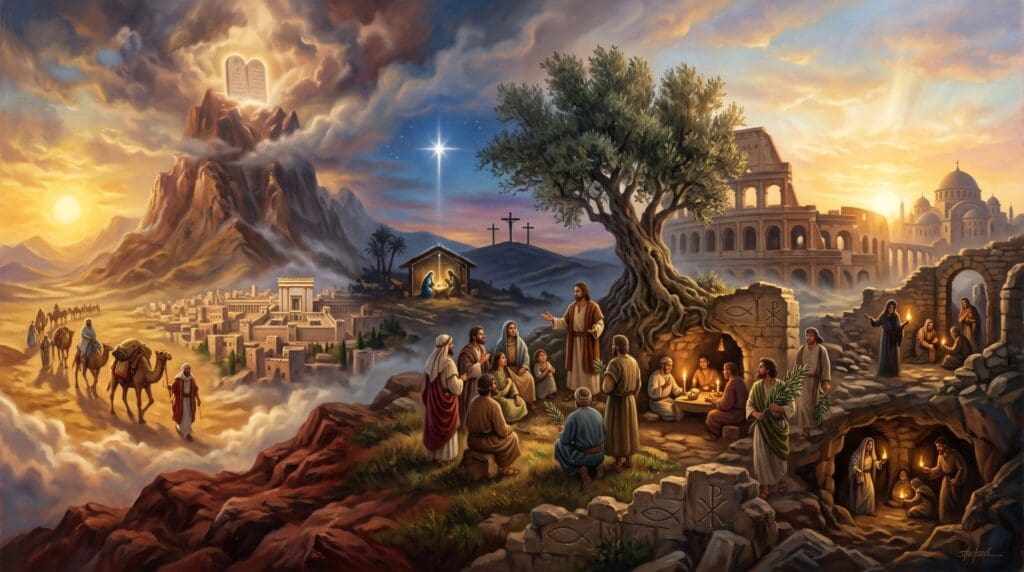
Acknowledging these differences honors the integrity of both traditions. Indeed, the Gospel of Matthew pays a poetic, unforgettable tribute to this ancient spiritual kinship right at the beginning of the Christian story. When Jesus is born in Bethlehem, who travels across the desert following a star to kneel at his cradle? The Magi—the hereditary priestly caste of Zoroastrian Persia. Whether read as literal history or inspired theological storytelling, that scene captures a profound truth: the wise men of Zarathustra’s lineage recognized the light they had tended for centuries shining in a new dawn.
Why does this forgotten history matter for how we live, train, lead, and heal today? Because understanding our shared spiritual roots dissolves tribal arrogance and awakens deep personal agency. Every morning we wake up standing on our own Chinvat Bridge. Every silent thought we entertain, every word we speak across a dinner table, and every small act of courage we choose either feeds the fog of deceit or tends the sacred fire of truth. We do not need to wait for a distant apocalypse to participate in the renovation of the world. We begin right now, inside the quiet sanctuary of our own consciousness, choosing good thoughts, speaking honest words, and turning our lives into living flames of grace.
Thanks for stopping by!
We’d love to know what you think. Drop a comment below with your feedback or suggestions—we can’t wait to hear from you.
Wishing You The Best, Stable Grace Staff Writers & Editors